
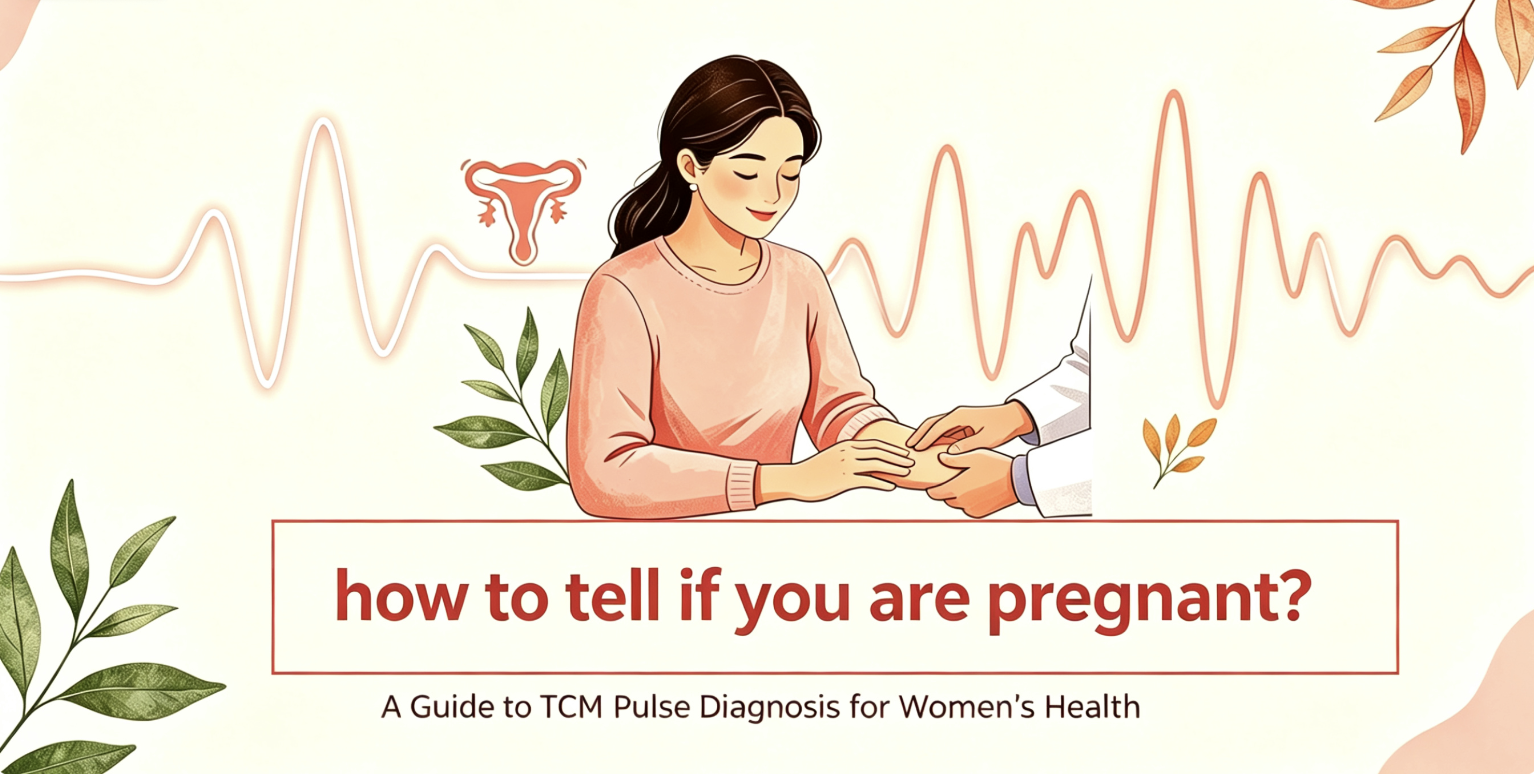
How Do I Know if I am Pregnant? Pulse diagnosis is a way to determine whether there is a pregnancy.
Many women exploring natural health and Traditional Chinese Medicine often ask: What is the difference between a pregnancy pulse and a period pulse? Both early pregnancy and upcoming menstruation create noticeable changes in your wrist pulse, which is why these two pulse patterns are often confused. While the two can feel similar to untrained fingers, registered TCM practitioners can spot distinct differences that reflect unique internal hormonal, Qi, and blood changes in your body.
It is important to note that everyone’s pulse is unique. Pulse reading is only one part of a complete TCM assessment and cannot be used as a standalone diagnosis. For accurate results and professional health guidance, always consult a registered TCM practitioner.
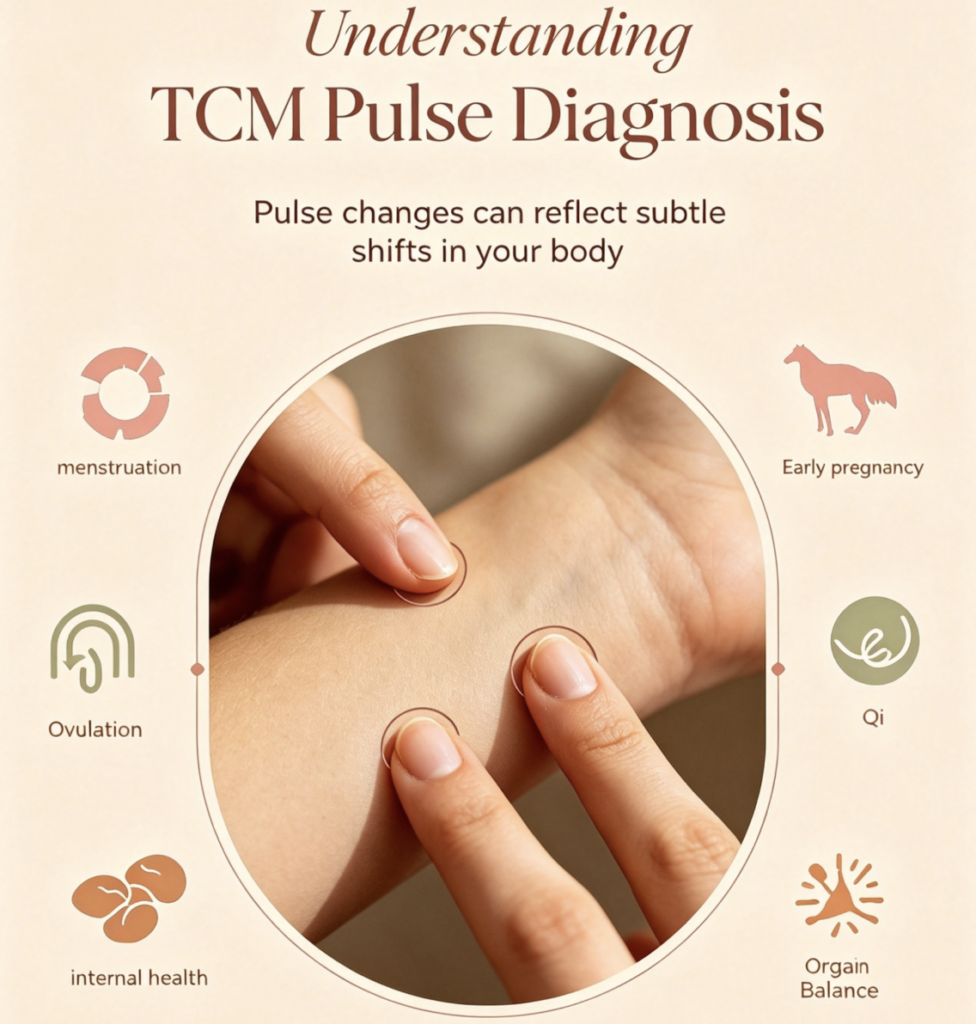
What Is TCM Pulse Diagnosis?
Pulse diagnosis is a core, time-honoured assessment method in Traditional Chinese Medicine. By feeling the radial wrist pulse at three key positions, TCM practitioners evaluate the state of your Qi, blood, organ function, hormonal balance, and bodily circulation. Unlike modern testing methods, pulse reading reflects subtle bodily shifts days or weeks before physical symptoms or lab results appear.
For women’s health, pulse changes are extremely sensitive to menstrual cycle fluctuations, ovulation, and early pregnancy. This is why TCM pulse reading is a popular natural method for tracking cycle health and identifying early signs of pregnancy.
What Does a Period (Menstrual) Pulse Feel Like?
In the lead-up to your period, your body undergoes specific blood and Qi movement changes to prepare for menstruation. This creates a distinct menstrual pulse pattern:
Key Period Pulse Characteristics
- Slippery yet uneven flow: The pulse feels slightly slippery and moving, yet unsteady as blood prepares to descend.
- Superficial and fluctuating: The pulse sits closer to the skin surface, feeling stronger and more active than your baseline pulse.
- Qi and blood descending pattern: The pulse reflects downward-moving blood flow, signalling the body is ready to release the menstrual lining.
In TCM theory, the pre-period pulse shows active blood movement with slight Qi stagnation. This explains common PMS symptoms like bloating, breast tenderness, mood swings, and pelvic tightness alongside the shifting pulse rhythm.
What Does a Pregnancy Pulse Feel Like?
Early pregnancy triggers a completely different internal shift: your body redirects Qi and blood upwards and inwards to nourish and anchor a new life. This creates a unique, distinct pregnancy pulse that differs greatly from a pre-period pulse.
Key Pregnancy Pulse Characteristics
- Strong, smooth, continuous slippery pulse: The classic pregnancy pulse is defined as “slippery and rolling”, feeling like smooth pearls rolling under the fingers—steady, full, and consistent.
- Deep, grounded rhythm: Unlike the superficial period pulse, the pregnancy pulse sits deeper and feels stable, reflecting consolidated Qi and blood nurturing the uterus.
- Balanced and full: The pulse feels abundant without fluctuation, showing the body is retaining and storing blood for fetal development rather than releasing it.
In early gestation, the pregnancy pulse becomes increasingly full and smooth as your body prioritises uterine nourishment, distinguishing it from the uneven, fluctuating pre-period pulse.
Core Differences: Pregnancy Pulse vs Period Pulse (Simple Breakdown)
Consistency: Pregnancy pulse maintains a uniform rhythm; Period pulse shifts daily as menstruation approaches
Pulse Texture: Pregnancy = smooth, steady, rolling; Period = slippery, uneven, fluctuating
Pulse Depth: Pregnancy = deep, grounded, stable; Period = superficial, close to skin
Energy Direction: Pregnancy = Qi & blood rising/consolidating for nourishment; Period = Qi & blood descending for release
Why It’s Easy to Confuse the Two Pulses
Both pregnancy and pre-menstrual states create a slippery pulse quality, which is why many people mix up the two readings. In both scenarios, blood circulation increases and bodily fluid activity rises, creating that signature slippery pulse sensation.
However, the stability, depth, and rhythm consistency are the key differentiators only trained TCM practitioners can accurately identify. Untrained self-reading often leads to misjudgement, as individual body constitutions vary greatly.
Important TCM Disclaimer for Pulse Reading
Everyone’s pulse is different. Factors including stress, sleep quality, diet, fatigue, hormonal imbalances, and underlying health conditions can alter your pulse pattern. Pulse reading is only one segment of a full TCM diagnosis.
A reliable TCM assessment always combines pulse reading with tongue diagnosis, symptom inquiry, lifestyle review, and menstrual cycle tracking. Never self-diagnose pregnancy or cycle conditions based solely on pulse feeling. Always seek a registered TCM practitioner for professional, safe, and accurate support.
How Professional TCM Pulse Reading Benefits Your Women’s Health
Professional TCM pulse diagnosis does more than just identify pregnancy or upcoming periods. It helps detect subtle imbalances including blood deficiency, Qi stagnation, kidney weakness, or damp-heat that may affect your fertility, cycle regularity, and overall reproductive health.
Whether you are trying to conceive, tracking menstrual health, or supporting early pregnancy wellness, our registered TCM practitioners provide personalised pulse assessment, lifestyle advice, and custom herbal/acupuncture treatments to balance your body naturally.
What happens if you are pregnant?
When conception occurs, your whole body immediately shifts its priority toward nurturing the new embryo, and these internal changes show up in your TCM pulse.
are redirected inward to nourishShortly after implantation, blood and Qi redirect inward to supply the uterus. The classic slippery rolling pregnancy pulse gradually emerges. For many people, this pulse sign can be picked up by an experienced registered TCM practitioner, even before a home pregnancy test shows a positive result.
If your practitioner picks up a pulse pattern suggestive of pregnancy, they will always recommend you take a home pregnancy test or visit your doctor for formal medical confirmation. TCM pulse assessment complements, but cannot replace, standard medical pregnancy testing.
At Ponsonby Wellness Centre, our practitioner specialises in women’s health care and pregnancy support.
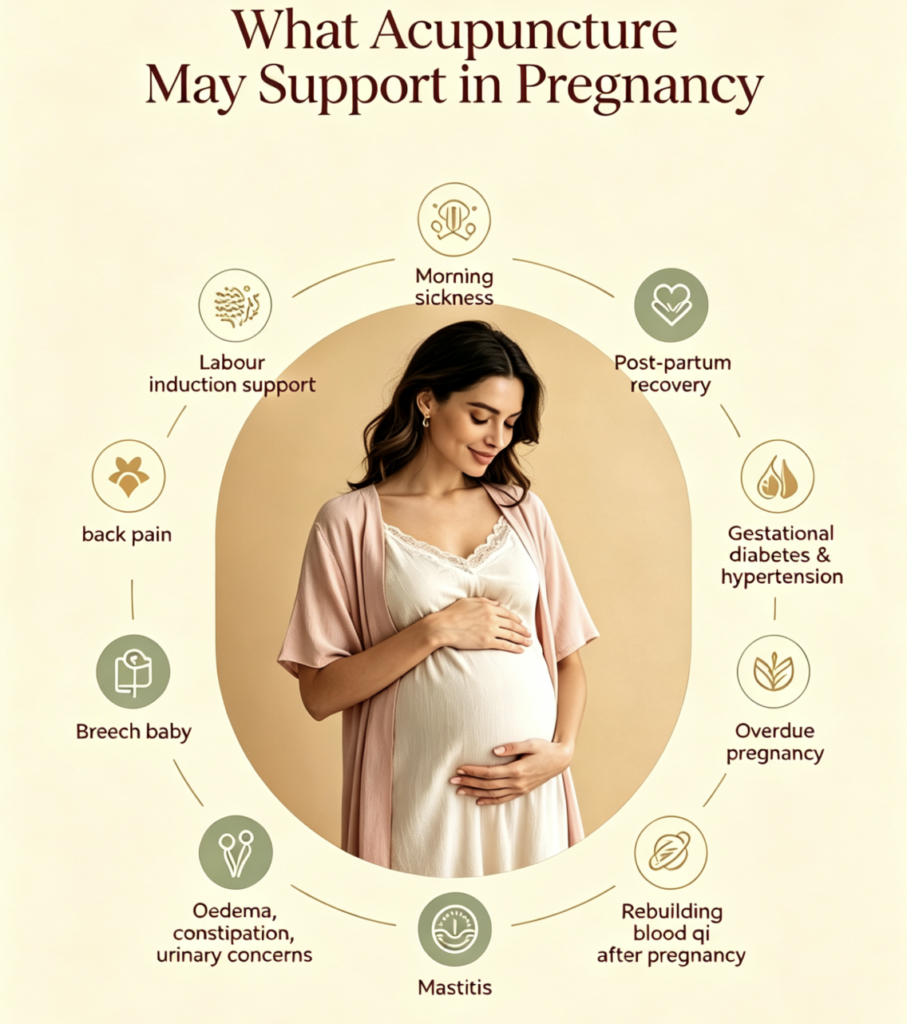
Acupuncture has been found to be a safe and effective option for supporting pregnancy and postpartum.
These include:
- Morning sickness
- Labour induction support
- Pelvic, back pain
- Post-partum recovery
- Gestational diabetes & hypertension
- Breech baby
- Overdue pregnancy
- Oedema, constipation, urinary concerns
- Mastitis
- Rebuilding blood qi after pregnancy
Book Your Professional TCM Pulse Assessment Today
Tired of guessing between early pregnancy signs and pre-period symptoms? A professional TCM pulse reading offers clear, natural insight into your body’s unique cycle and hormonal state.
Book a consultation with our registered TCM team today for accurate pulse diagnosis, personalised women’s health guidance, and natural holistic support for your cycle, fertility, or early pregnancy journey.
Book TCM Pulse Diagnosis | Professional Women’s Health TCM Assessment
Contact us:
phone number: 021 2159963
email address: ponsonbywellness@gmail.com
57 Sussex St,
Ponsonby
Auckland 1021